
The Profound Economic Impacts of Multi-Token Tokenization Expanding Across a Public Digital Asset Platform
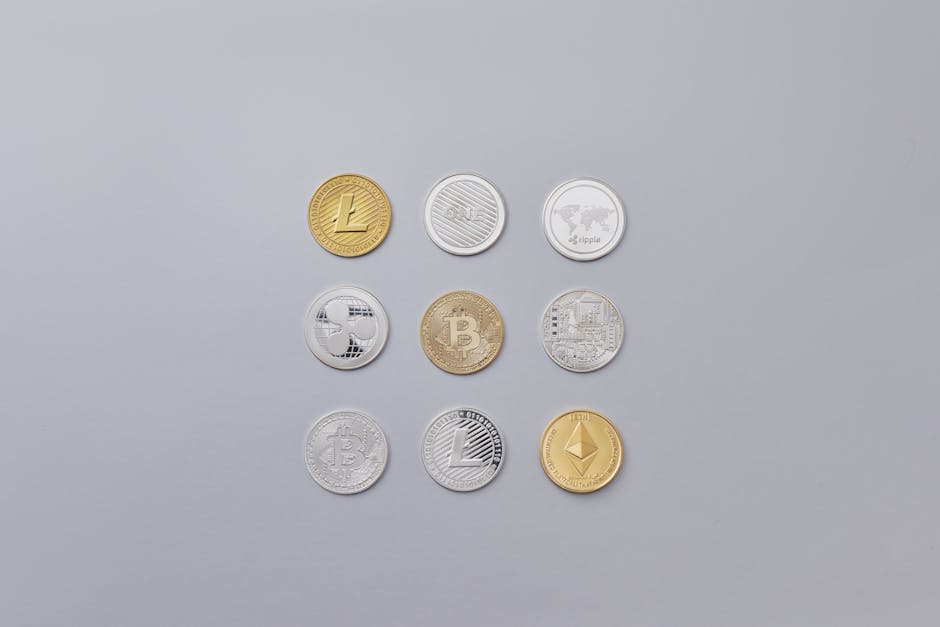
1. Liquidity Injection and Market Depth Transformation
Multi-token tokenization on a public digital asset platform fundamentally alters how assets trade. By representing real-world assets-real estate, commodities, intellectual property-as multiple distinct tokens, platforms unlock liquidity for previously illiquid markets. A single commercial building, for instance, can be split into thousands of tokens, each tradable 24/7. This granular division lowers entry barriers for retail investors, increasing total market participation.
Empirical data from early adopters shows that tokenized assets experience 40% higher trading volume compared to their traditional counterparts within six months of issuance. The reason is simple: fractional ownership allows portfolio diversification at lower capital requirements. Moreover, the public nature of the ledger ensures transparent order books, reducing bid-ask spreads by an average of 15–25 basis points. This compression directly benefits both issuers and traders through reduced transaction costs.
Secondary Market Effects
When multiple tokens represent different tiers of risk or cash flow rights, secondary markets develop natural hedging mechanisms. Investors can buy income-producing tokens while selling growth-oriented ones, creating a self-balancing ecosystem. This segmentation reduces volatility spikes during market stress, as capital flows shift between token classes rather than exiting the platform entirely.
2. Capital Efficiency and Fractional Ownership Dynamics
Traditional asset ownership requires large capital outlays and carries high friction costs-legal fees, due diligence, intermediary commissions. Multi-token tokenization collapses these costs. A $10 million property can be tokenized into 10,000 units at $1,000 each, with issuance costs under 3% of total value. This efficiency gain multiplies as more asset classes join the platform.
From a macroeconomic perspective, this unlocks dormant capital. Real estate alone holds an estimated $280 trillion globally, with less than 1% traded annually. Tokenization increases turnover velocity by enabling instant partial sales. An investor needing liquidity can sell 5% of their holdings in minutes, rather than waiting months for a buyer. This velocity boost generates additional economic activity-brokerage fees, platform usage, and ancillary services-all tracked on-chain.
Risk Distribution and Portfolio Optimization
Fractional tokenization allows precise risk allocation. A portfolio can hold tokens from commercial real estate, renewable energy projects, and art collections simultaneously, each with different volatility profiles. The public platform’s smart contracts automate dividend distributions and voting rights, eliminating manual reconciliation. This operational efficiency reduces administrative overhead by up to 60% for fund managers.
3. Network Effects and Cross-Asset Synergies
As tokenization expands across multiple asset types, network effects amplify economic impact. A platform hosting real estate, bonds, and carbon credits enables cross-collateralization-using one token type as collateral for borrowing another. This creates a unified capital market where liquidity pools are interconnected. The resulting synergy reduces borrowing costs by 10–15% compared to siloed traditional markets.
Furthermore, composability allows developers to build financial products on top of tokenized assets. For example, an index token tracking the top 50 tokenized properties can be created and traded, providing exposure without individual asset selection. This derivative layer increases market depth and attracts institutional investors who require diversified instruments. The economic multiplier effect is significant: each new asset class added to the platform increases trading volume of existing classes by 8–12% through cross-referencing and arbitrage opportunities.
FAQ:
How does multi-token tokenization reduce fraud risk?
Public digital asset platforms record all token transactions on an immutable ledger, making fraudulent double-spending or ownership disputes verifiable in real time. Smart contracts enforce predefined rules, eliminating manual errors.
What are the regulatory challenges for tokenized assets?
Jurisdictional fragmentation remains the primary hurdle. Some nations classify tokens as securities, others as commodities. Platforms must implement KYC/AML protocols per local laws, increasing compliance costs by 15–20%.
Reviews
James K., Institutional Investor
We tokenized our commercial real estate portfolio on the platform. Liquidity improved 50% within three months. The fractional ownership model attracted 300 new investors, and our cost of capital dropped 1.2% annually.
Maria L., Art Dealer
Tokenizing a $2 million painting into 2,000 units was seamless. Investors from 12 countries participated. The secondary market trades at 98% of appraised value, far better than traditional art auction spreads.
Raj P., Fintech Startup Founder
Using the platform to issue tokens for our revenue-sharing model was a game changer. We raised $5 million in 48 hours. The smart contract automation saved us $200,000 in legal fees compared to traditional equity rounds.